
Our Approach
A Structured Approach to Long-Term Ski Development
Many committed skiers invest years in improving, yet eventually reach a plateau. More mileage, more lessons, or greater intensity do not always lead to lasting progress.
True North applies long-term athlete development principles to alpine skiing within a continuous, year-round system. Technical training, athletic preparation, training load, and recovery are aligned so each supports the others, allowing improvement to become more consistent, durable, and repeatable over time.
Quick Overview
Development Is a Process, Not an Event
Progress does not come from isolated sessions.
It develops over time through:
focused training
appropriate exposure
and sufficient consolidation
Each phase builds on the last, creating a foundation for the next. Rather than chasing immediate results, the emphasis is on producing technical changes that remain stable across seasons.
Skill Before Intensity
Technical development requires the right conditions.
movement patterns are introduced under control
stabilized through repetition
and only then applied under increasing speed, terrain, and pressure
Intensity is used to reinforce skill—not replace it.
Managing Training Load
All training contributes to total load:
skiing
physical training
travel
life stress
Progress depends on applying the right amount of load at the right time—not simply doing more.
Recovery Enables Adaptation
Training creates the stimulus. Recovery allows change to occur.
Without adequate recovery:
technical changes do not stabilize
physical gains do not hold
Recovery is not time away from training. It is an essential part of the development process.
Athletic Development Is Continuous
Skiing performance depends on physical capacity.
In the off-season, capacity is built
During the ski season, it is maintained and applied
This continuity allows athletes to:
train more consistently
recover more effectively
continue to progress over time
In Practice
The Development Cycle Model
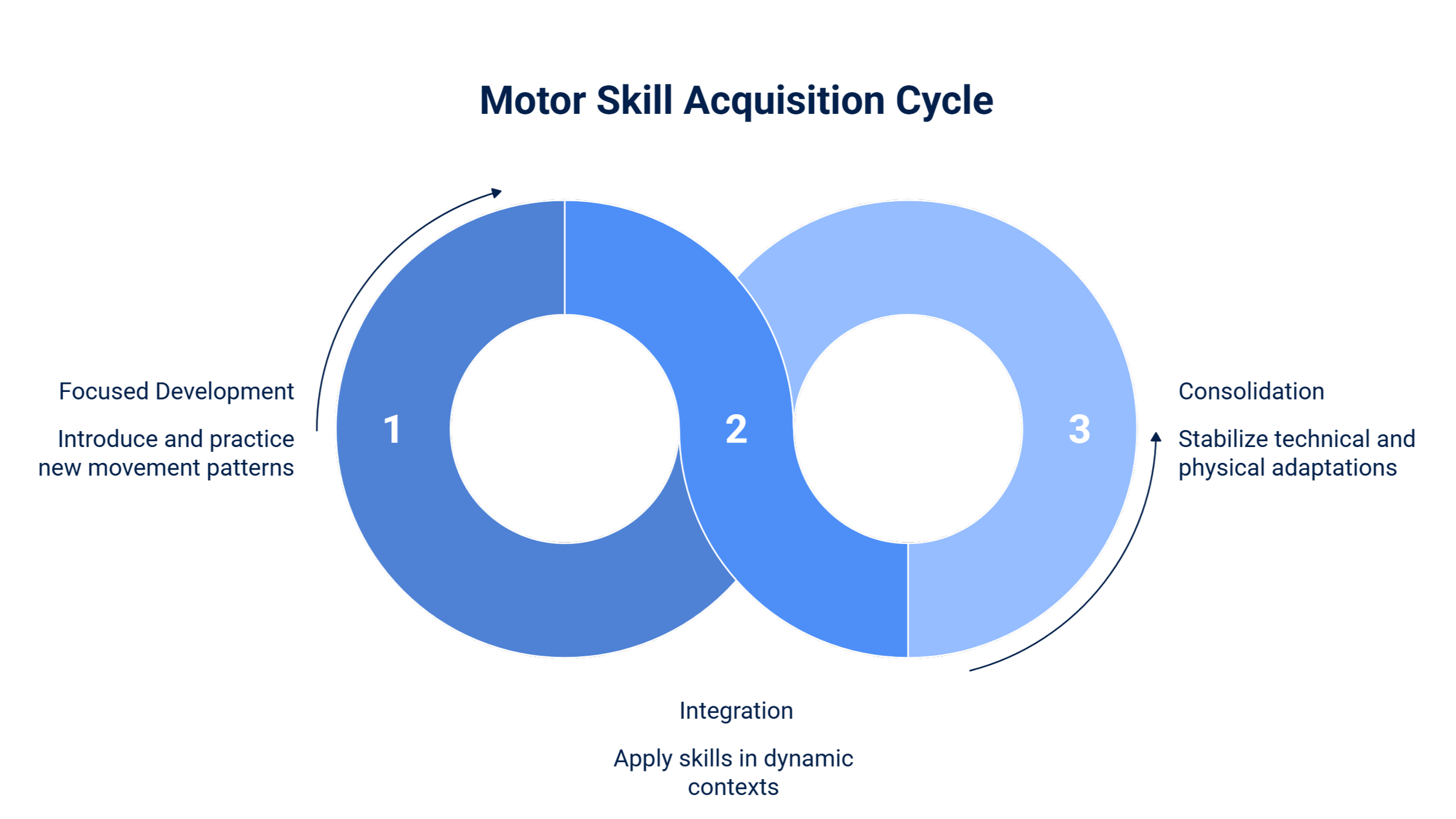
Development does not happen in isolated sessions. It unfolds through repeated Development Cycles, each consisting of three complementary phases:
Focused Development → Integration → Consolidation
These phases are supported throughout the year by athletic preparation, thoughtful load management, and appropriate recovery.
Focused Development
In the Focused Development phase, new movement patterns are introduced and practiced under controlled conditions. The emphasis is on understanding, refining, and beginning to stabilize technical changes rather than chasing immediate performance. Establishing sound movement patterns early provides the foundation for everything that follows.
Integration
During the Integration phase, athletes begin applying newly developed skills under progressively greater demands. Speed, varied terrain, and external pressure are introduced deliberately so technical changes become functional rather than remaining isolated practice movements. Integration connects technical learning with real skiing.
Consolidation
Consolidation is where technical and physical adaptations are allowed to stabilize fully. Although often overlooked, this phase is essential to long-term progress. Consolidation helps movement patterns become repeatable across a range of conditions and provides the foundation for future development rather than requiring athletes to relearn previous gains.
Why Structure Matters
Without structure, athletes often train inconsistently, apply intensity too early, and accumulate fatigue without meaningful adaptation. This typically results in unstable technique, plateaued performance, and an increased risk of injury.
A structured approach aligns what is trained, when it is trained, and how it is supported, allowing progress to become more consistent and sustainable.
Guidance Without Dependency
Athletes require different levels of support. Some prefer clear principles and execute independently, while others benefit from structured planning and ongoing coaching. Both approaches are valid.
The role of coaching is to provide clarity, structure, and informed decision-making—without creating unnecessary dependency or constant oversight.
Long-Term Progression
When applied consistently, this approach leads to more stable and repeatable technique, greater confidence across a wider range of terrain and conditions, improved physical durability, and an increased capacity to continue developing over time.
Each Development Cycle builds upon those that came before it, creating cumulative progress rather than isolated improvements.
The Role of the Athlete
Progress depends on engagement.
Coaching provides direction, structure, and feedback.
Athletes are responsible for applying technical priorities, managing effort and recovery, and maintaining consistency between Development Cycles.
Lasting improvement comes from the partnership between thoughtful coaching and committed execution.
Key Principles
Development is structured and progressive
Skill is built before intensity is increased
Load is managed deliberately
Recovery is essential to adaptation
Athletic development is continuous
Progress depends on consistency over time
How This Connects
This approach underpins everything within the True North system.
Development Cycles are where athletes train on snow within a focused, high-quality coaching environment. Membership supports the process between cycles, providing the structure and guidance needed to sustain and extend progress over time.
If this philosophy aligns with how you want to develop as a skier, the next step is understanding how the system works and how your first Development Cycle fits within your long-term progression.
Start with an Initial Development Cycle and experience how this approach is applied in practice.