
Coaching philosophy
Quick Overview
We coach skiing as a long-term developmental process, not a series of disconnected sessions. Meaningful progress occurs when technical work, athletic preparation, load management, and recovery are deliberately aligned over time.
Athletic development is a year-round process. What changes across the year is not whether you train, but what you emphasize:
In the off-season, the focus is on building fitness and capacity
During the ski season, the focus shifts toward skill development on snow
At all times, fitness must be maintained — and where possible, improved — to support learning and durability
This continuity matters. When athletic capacity is built and maintained over time, athletes are able to:
tolerate more training
recover more effectively
and return each season at a higher baseline
Every athlete moves through structured Development Cycles designed to build skill, capacity, and self-reliance — with guidance tailored to their goals, experience, and preferences.
Our role is to assess these qualities, provide clarity, and help you maximize their impact — without creating dependency.
In Practice
Development Cycles, not one-offs
Every cycle has a clear purpose — building capacity, refining movement, integrating skill under appropriate load, and allowing enough consolidation for change to hold. This structure is deliberate; how it applies to you is individualized.
Athletic development is continuous
Skiing performance is supported by strength, aerobic capacity, power, durability, balance, and mobility. These qualities are not built in a week — and they are not maintained automatically.
During the ski season:
fitness is not the primary focus
but it must be maintained at a level that supports skill acquisition and repeatability
This allows you to:
sustain training quality across consecutive days
reduce injury risk
and continue progressing rather than plateauing
Over time, this creates a compounding effect — each season begins from a higher level.
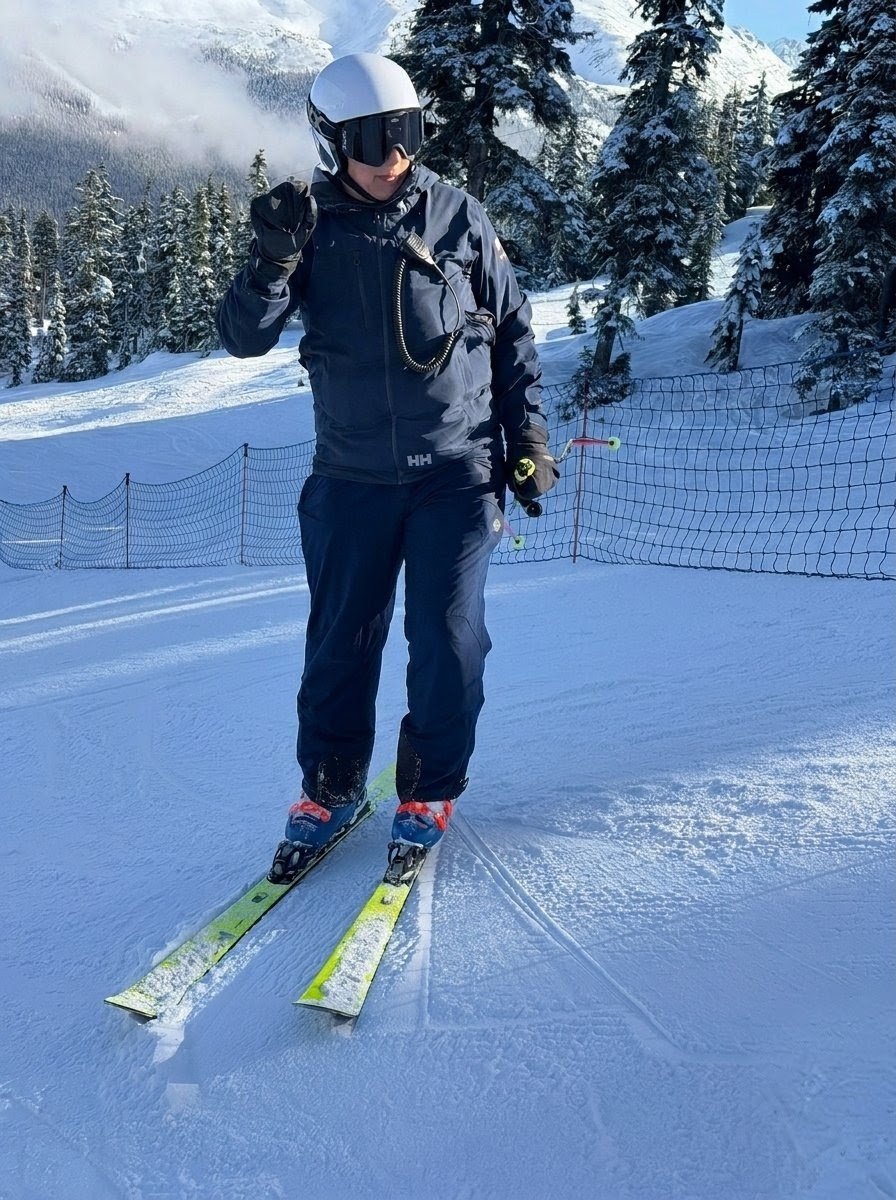
Load management and recovery are core processes to create balance
All training — whether in the gym, on snow, or between cycles — is load.
What matters is not how much you do in isolation, but:
how that load is distributed
how it is absorbed
and how you recover from it
We treat load management as a continuous, proactive process:
monitoring training and recovery trends
adjusting intensity and volume
scheduling recovery intentionally
The objective is simple:
maximize adaptation while minimizing unnecessary fatigue and injury risk.
This is the difference between:
a structured training approach
and simply “working hard”

Guidance without dependency
Some athletes benefit from close, ongoing mentorship; others prefer clear principles they can apply independently or with their own trainer. Both approaches are valid.
We provide structure, interpretation, and decision support — not constant control.
Direct, long-term coaching
We communicate honestly about what it takes to progress. When change requires technical, physical, or behavioral adaptation, we guide it. When restraint and consolidation are more valuable than additional effort, we protect them.
Our responsibility is to help you progress sustainably and repeatedly, not just in isolated moments.
Shared responsibility
Progress depends on athlete engagement. Effort, preparation, and practice outside coached sessions matter — but so does judgment:
when to push
when to hold
when to recover
We provide guidance, tools, and mentorship. Execution remains your responsibility.